
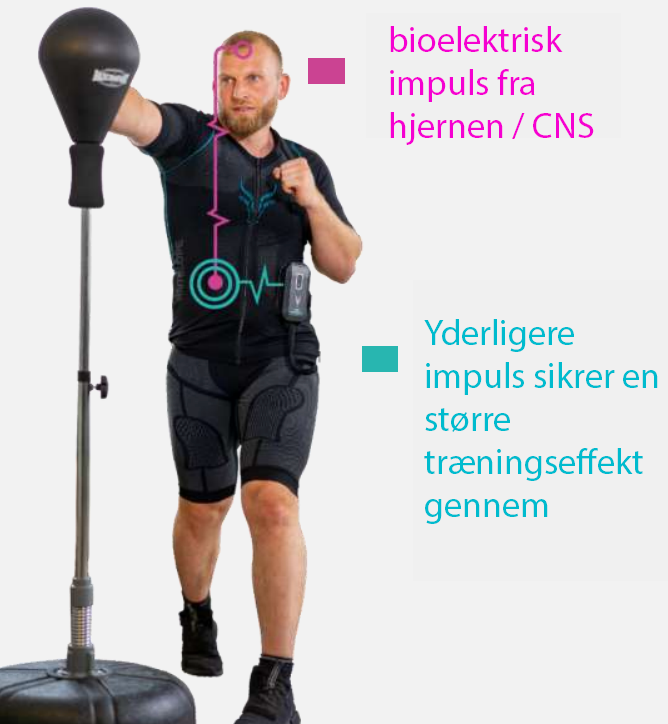
EMS stands for electrical muscle stimulation.
With EMS, electrical impulses are used to make the striated muscles contract in a controlled manner. While muscles in conventional training are controlled by bioelectrical signals from the brain/central nervous system, muscles in EMS training receive electrical impulses from an external source.
Time-saving 20-minute workout:
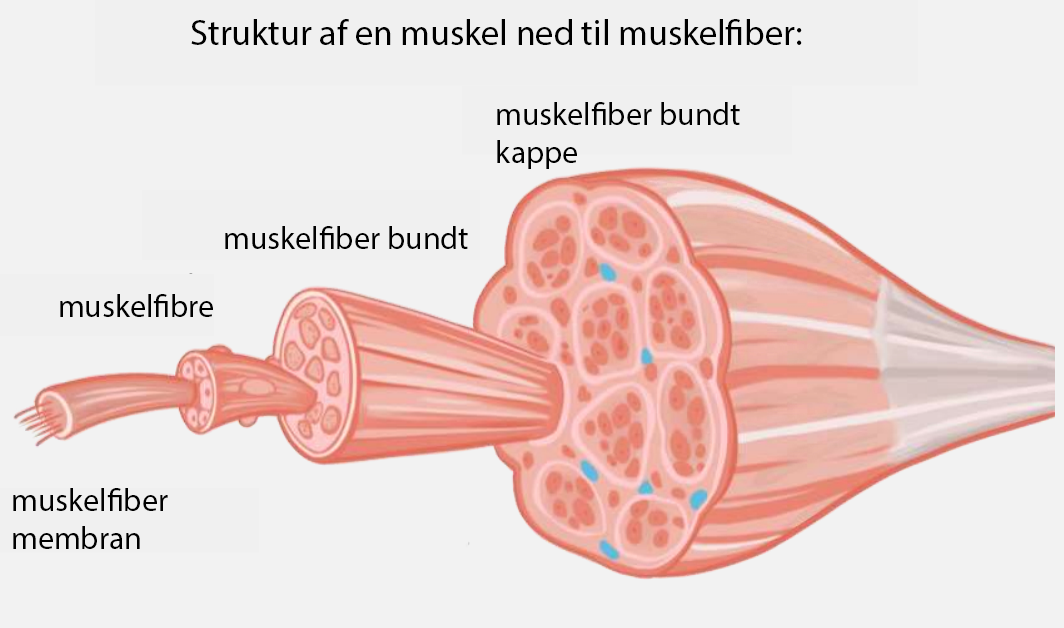
- 90% of muscle fibers are affected by the external impulse.
- Many muscle groups and body areas are trained simultaneously.
Other facts
Is it waterproof?
No
I have a pacemaker, would it be safe to use your suit?
Unfortunately, it is not safe to use an EMS suit if you have a pacemaker or other types of electronic implants. The EMS suit works by sending electrical impulses through the muscles, and this can interfere with the function of electronic devices such as a pacemaker.
We strongly recommend that you refrain from using an EMS suit if you have a pacemaker. It is crucial for your safety to avoid any form of electrical muscle stimulation unless your doctor or cardiologist has given specific permission.
Before considering using our EMS suit or similar equipment, we strongly encourage you to consult your doctor or cardiologist for personalized advice and clarity on any risks and safety precautions.
Our goal is always to ensure the well-being and safety of our customers. If you have further questions or concerns, please feel free to contact our customer service, who are ready to assist you by phone: 7157 70 95 or email info@fitmedems.dk.
Where is the suit produced?
Germany
How are your goods shipped?
How to clean an EMS suit?
Can an EMS suit replace traditional training?
The Antelope suit can be an effective supplement to traditional training, but it is not necessarily a replacement. EMS is designed to supplement conventional training by adding an extra dimension of muscle activation. Here are some considerations:
1. Complementary Effect:
- The Antelope suit can help activate and stimulate muscles in a way that may be difficult to achieve with traditional training alone. This can lead to further muscle building and strength.
2. Time Saving:
- EMS training is known to be time-saving, as it can provide an intense workout in less time compared to conventional training. This makes it attractive for those with busy schedules.
3. Muscle Activation:
- EMS can target specific muscle groups more precisely, which can be beneficial for those who want to focus on certain areas of the body.
4. Strength Improvement:
- A number of studies have shown that EMS can contribute to strength improvement and muscle building. This can make it a useful tool for both fitness enthusiasts and athletes.
5. Differences in Training Experience:
- Traditional training typically involves more complex movements and can include cardiovascular training, flexibility exercises, and coordination exercises. The EMS suit primarily focuses on muscle stimulation.
6. Consult with Healthcare Professionals:
- It is important to mention that you should consult with healthcare professionals before starting any form of exercise program, especially if you have existing health conditions.
7. Depends on Goals:
- Whether the EMS suit can replace traditional training depends on individual goals. If the goal is general fitness, weight loss, or muscle building, a combination of EMS and traditional training is likely optimal.
8. Variation in Training Routine:
- Some people choose to use the EMS suit as part of their training routine to add variation and challenge muscles in new ways.
Ultimately, you should consider including EMS training as a supplementary component to your training and not necessarily as a replacement. Combining EMS with traditional training can give you a versatile and effective approach to fitness.
What are the costs, and are there any ongoing expenses?
You need to buy contact spray to keep the suit clean, but otherwise there are no running costs
Are there any recommended training programs or routines?
Is the EMS suit easy to use at home, and does it require special knowledge or skills?
EMS suits are generally designed to be user-friendly and can be used at home without the need for special skills or technical knowledge.
Warning:
Although EMS suits are designed to be user-friendly, it is important to understand that correct use and adherence to safety precautions are crucial.
What kind of clothes should I wear under the EMS suit for optimal comfort?
For optimal comfort during EMS training, it's important to choose the right clothing that not only ensures a good fit of the EMS suit but also allows freedom of movement and absorbs any sweat. Here are some general recommendations:
- Close-fitting, Breathable Clothing:
- Avoid Thick Materials:
- Choose Stretchy Fabrics:
- Moisture-wicking Material:
- Flat Seams:
- Comfortable Sports Bra and Underwear:
- Comfortable Shoes:
- Consider Temperature and Climate:
- Remove Jewelry:
- Feel Comfortable:
Overall, your clothing should support your training experience by providing comfort, freedom of movement, and allowing the EMS suit to function effectively.
How is the EMS suit powered, and are batteries included?
If you choose to purchase a suit, the battery is included. If you choose to buy t-shirts and/or shorts separately, you will not receive a battery.
Charging:
- Follow the manufacturer's instructions for proper battery charging. Use the included charger or USB cable, and ensure the battery is fully charged before using the EMS suit.
Storage During Charging:
- Avoid using the EMS suit while it is charging. Allow it to fully charge before use.
Battery Life:
When fully charged, the battery lasts for 24 hours.
Regular Maintenance:
- Ensure regular maintenance of both the EMS suit and the rechargeable battery. Keep the electrodes clean and dry to ensure optimal performance.
Can I use the EMS suit as part of my warm-up or cool-down?
The Antelope suit can potentially be used as part of your warm-up or cool-down, but it is important to understand how to integrate it into your training routine and take into account the specific characteristics of EMS.
Warm-up:
Muscle Activation:
- EMS can help activate muscles, and some people find it useful as part of their warm-up. It can be a way to prepare muscles for more intense physical activities.
Low Intensity:
- For warm-ups, it is usually recommended to start with low intensity and gradually increase it to avoid the risk of overexertion or injury.
Focused Areas:
- The EMS suit can target specific muscle groups, which can be useful if you want to focus on certain areas during your warm-up.
Cool-down:
Muscle Relaxation:
- After intense training, EMS can be used at low intensity to help relax muscles. This can be incorporated as part of your cool-down.
Reduce Muscle Tension:
- EMS can help reduce muscle tension and potentially decrease post-workout soreness.
Are there any specific dietary recommendations in connection with EMS training?
Can I use an EMS suit if I have health problems or injuries?
The use of an EMS suit, like any form of exercise, should be approached with caution, especially if you have health problems or injuries. Before starting EMS training, it is crucial to consult a healthcare professional, such as a doctor, physical therapist, or a sports medicine specialist. This is important to ensure that EMS training is safe and appropriate for your specific health condition.
Cardiovascular Issues:
- Individuals with cardiovascular problems should consult a cardiologist, as EMS can affect heart activity. People with heart problems, cardiac arrhythmias, or other similar conditions should avoid EMS unless approved by a doctor.
Neurological Conditions:
- If you have neurological conditions such as epilepsy, you should avoid EMS training, as electrical stimulation can have a negative impact on these conditions.
Skin Problems:
- In case of skin problems such as eczema, wounds, or infections, EMS should not be applied to the affected area, as it can worsen the condition.
Pregnancy:
- Pregnant women should avoid EMS training without prior approval from a healthcare professional, as the effects of electrical stimulation during pregnancy are not fully understood.
Other Health Problems:
- Individuals with other health problems should consult a doctor for advice before using an EMS suit. This includes people with diabetes, epilepsy, or other chronic diseases.